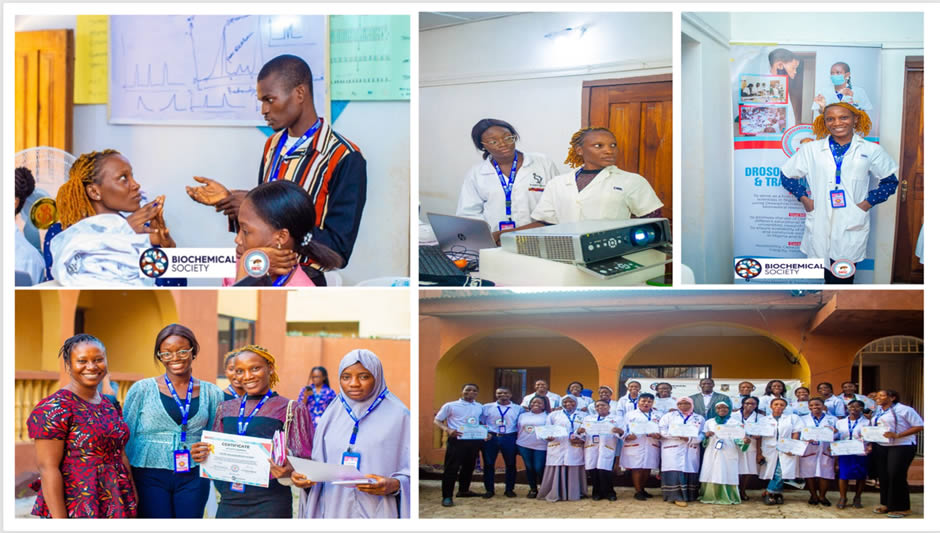
Faith B. Friday Shares Transformative Experience at Women’s Biomedical Research Advancement Project at the Drosophila Research and Training Center (DRTC), Ibadan
As an early-career researcher with a keen interest in stroke research, participating in the Women’s Biomedical Research Advancement Project by Faith B. Friday, a master’s degree student, at the DELSU Joint Canada-Israel Neuroscience and Biopsychiatry Laboratory, represented a defining milestone in her academic and professional development. This intensive, one-week hands-on training program not only introduced Faith to advanced biomedical laboratory techniques but also to cutting-edge computational approaches such as molecular docking and bioinformatics skills that profoundly shaped my research trajectory. The family-oriented spirit of the team members and the collaborative spirit of the participants made the event a memorable one.
The Facilitators included Prof. Cassandra Extavour (Professor of Molecular and Cell Biology at Harvard University), Dr. Yumi Kasai (Head of Cancer Genomics at the Genomics Innovation Alliance,, University of Glasgow), Prof Olayinka Olusola Omigbodun FAS (Professor of Psychiatry, College of Medicine, University of Ibadan) and Prof Isabel M. Palacious (Lecturer on the Nanchang Joint Programme at Queen Mary University of London and a visiting scientist at the University of Cambridge also the founder of Charity DrosAfrica, with the mission of helping to set up an African research community using Drosophila as a model system for human diseases of interest in the areas).
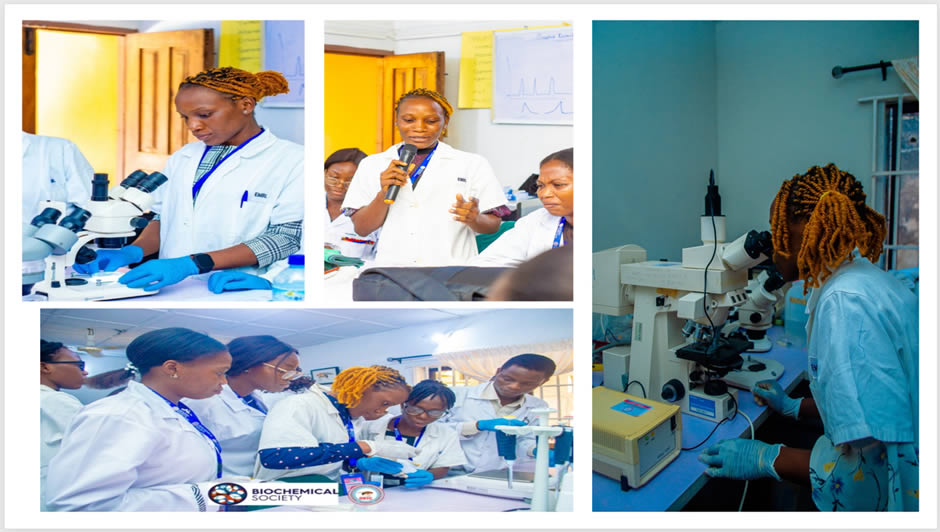
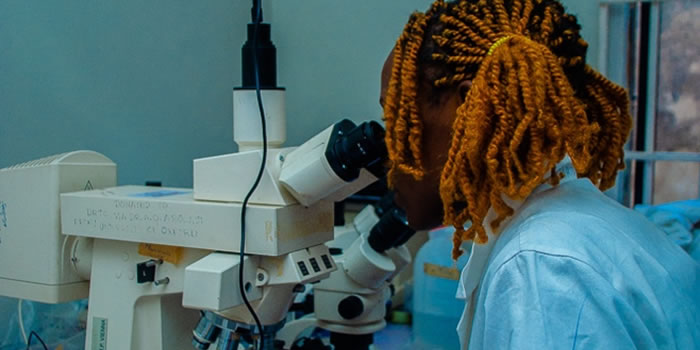
Her training consisted of practical sessions on Drosophila melanogaster handling and dissection, micropipette techniques, DNA extraction, molecular assays (reactive Oxygen and nitrogen species), gel electrophoresis, molecular docking, microscopy and data analysis. These experiences solidified Faith’s understanding of experimental design and precision, while the guided data interpretation workshops deepened her analytical capabilities. According to Faith, the bioinformatics module demonstrated how large-scale data analysis can uncover patterns relevant to neurological disorders, aligning directly with her commitment to stroke research.
Faith reported that one significant highlight of the program was the molecular docking workshop, where she learned to model the interaction between small molecules and protein targets. This session was a turning point: witnessing how in silico predictions could inform in vitro experiments ignited her passion for integrative research approaches. Faith realized that combining wet-lab techniques with computational modelling could enable a more efficient pathway to identifying potential therapeutics for stroke-related pathologies and other neurological disease conditions.